BY Lola Gomez-Ribeiro & Ryan Pyke
Yassin Al-salman had his first experience with music on a cassette. As a child, his sister would play songs by George Michael and Michael Jackson. His first album was Michael Jackson’s Bad when he was six years old.
Living in the Emirates, he didn’t have access to hip-hop radio, so his boys would record K103 or CKUT and send him the hip-hop shows.
“Alongside the CDs and albums, they would send me recordings of three-hour radio shows to listen to. Cassettes were 90 minutes long; there were 60-minute options, but you could record 45 minutes on one side. These were thick tapes,” says Al-salman.
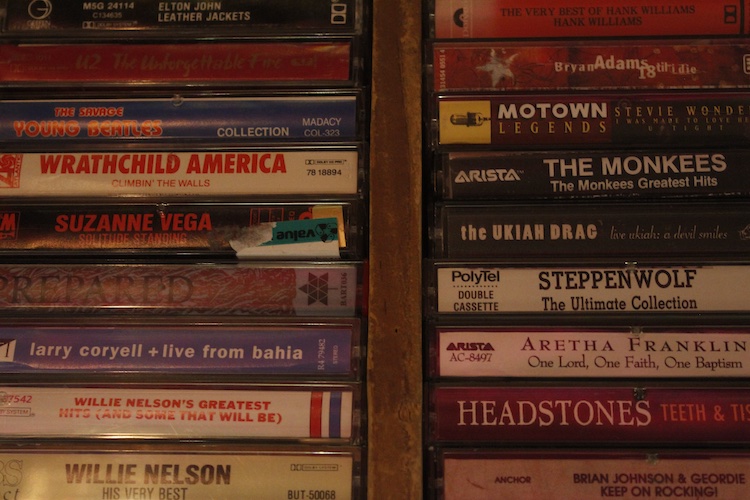
Cassettes organized in a drawer at Cheap Thrills music store in downtown Montreal. Photo by Lola Gomez-Ribeiro.
They would make mixtapes for each other, before the CD-burning era. You would record one song off the CDs, get another CD, add another song and give those mixtapes to people as letters.
“My first girlfriends, I would give them mixtapes, it was like love letters. Music is like a love language”, says Al-salman.
Buying physical media is an easy way for fans to show their support for a band, according to Dylan Beauchamp, drummer for Montreal based punk band Shirehead. “You relate the physical media to the experience you had.”

Shirehead band performing at P’tit Ours venue. From left to right: Joni Butler as lead singer, Erik Kennedy on keys and Diego Martin Martinez on bass. Photo by Lola Gomez-Ribeiro.
“You can buy a cassette; it’s coloured, you can see the branding behind the band, and it connects to the band so much more because of the colours. It’s not something you can find; it’s not accessible,” says Joni Butler, lead singer for Shirehead.
As with most smaller bands, if you want a cassette you can only find one on their Bandcamp page or by going to a show. They’re ten dollars each.
“People are listening to cassettes in old cars. A lot of people are buying multi-cassette players from the thrift shops for super cheap, and they are still working because cassette players rarely die,” says Butler. It’s nice to do something real and own something physical.
Butler used to have a label where he distributed cassettes for bands back in the U.K., releasing their albums on cassette, so it’s just something he likes to do. Shirehead wants to record the album in full on tape. Butler has a four-track cassette player that he uses to record music; he’s going to record Shirehead’s next album on it.
Despite the popularity of streaming services, some local artists are leaning into C.D.s. Musicians Jay Côté and Yassin Alsalman expand on this trend. Video by Ryan Pyke.
French company We Are Rewind started four years ago with the idea to work on a bluetooth cassette tape player that allows people to create their own mixtapes through music app Spotify.
“It’s kind of a mix between the old generation, with the old device that we had at that time, that I had at the time because I’m 51 years old, back in the 80’s”, says Olivier Depoilly, partner and sales director.
Last year they made a cassette player in collaboration with Canadian band Chromeo. The company has seen massive success in the US, UK and Canada.
“They want to buy cassettes because it’s cool, it’s vintage, it’s not expensive compared to vinyl and they need to have physical things in their hand,” said Depoilly on why the young generation is interested in cassettes again.
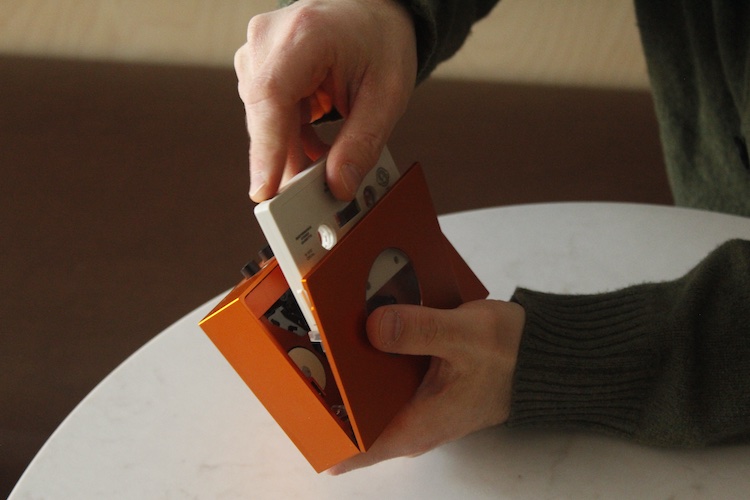
Individual using We Are Rewind’s orange cassette tape player. Photo by Lola Gomez-Ribeiro.
“For bands selling it off the stage, it’s a great way to get your music out there,” says Paul Gott, lead singer of punk rock band Ripcordz. “Putting out a CD or album costs thousands of dollars, and you need to make at least five hundred to make it worthwhile. But with cassettes, you can put out for anywhere from 25 to 100, and you can sell them at a reasonable price.”
His band released ten albums on cassette, and is releasing another soon. It’s common in the punk scene for bands to sell their merch directly from the stage. Today, bands are going back to cassettes for the same reason they did in the ‘80s: They don’t have much money.
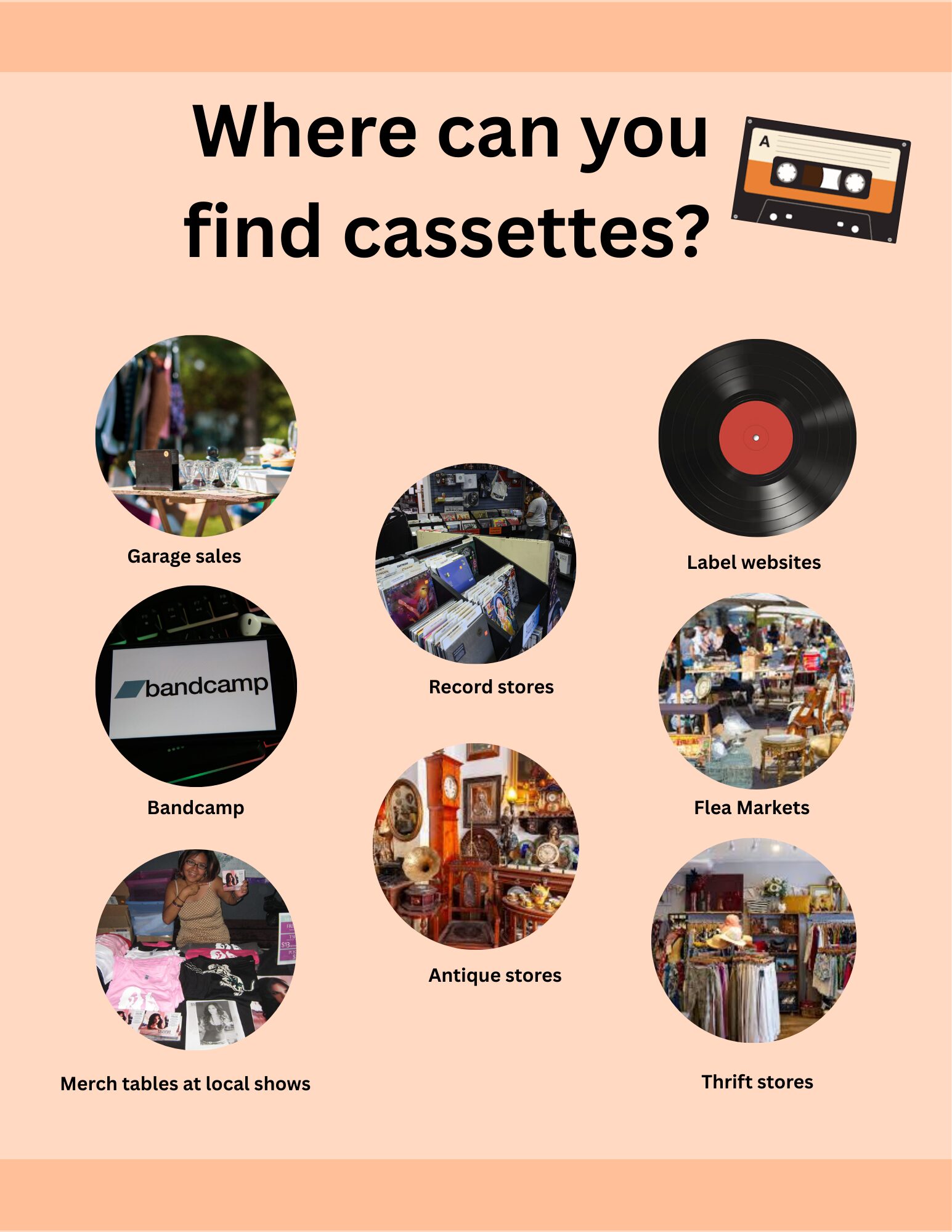
Where to find cassettes. Photo by Lola Gomez-Ribeiro.
According to Growth Market Research, the global cassette tape market size reached US$312 million in 2024, driven by nostalgia and renewed interest in analog audio formats. They estimate the cassette tape market will reach US$523 million by 2033.
“There’s something about the physical medium of the tape; it’s small and compact,” says Butler. He also handmakes all their merch and everything to do with the cassettes they sell. There’s the impression inside, which he makes by hand.
To some the cassette remains an inconvenience.
“The cassette died a very deserving death, probably about twenty years ago,” says Gott. “You couldn’t pick a track; you had to fast-forward and rewind it all the time. Tapes would stretch out, and they would sound funny if you left them in the sun.”
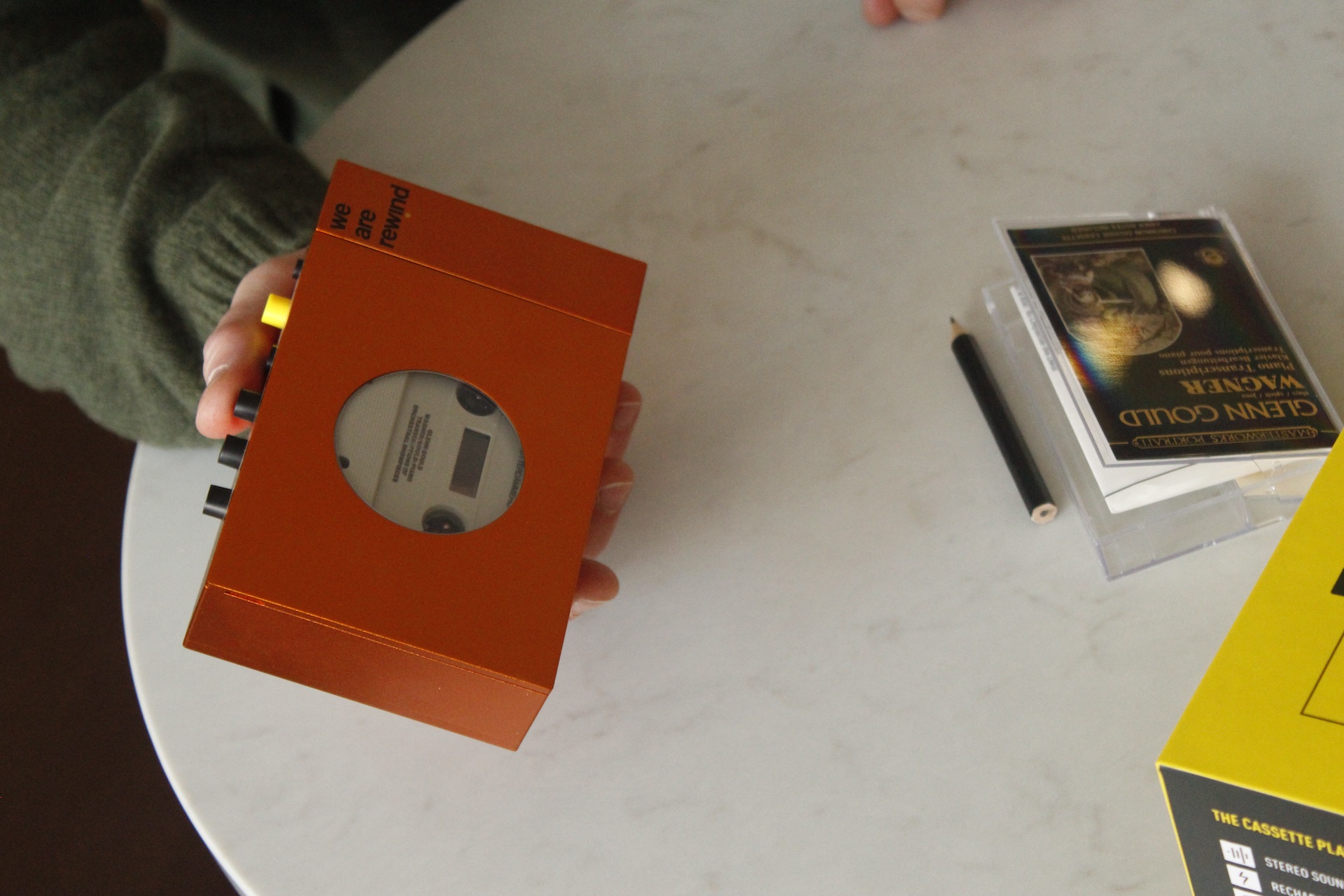
A pencil was required to rewind the cassettes if they got stuck or oftentimes the tape started to crumble.
“I found they were a necessary evil, but you know one we definitely used,” Gott says.
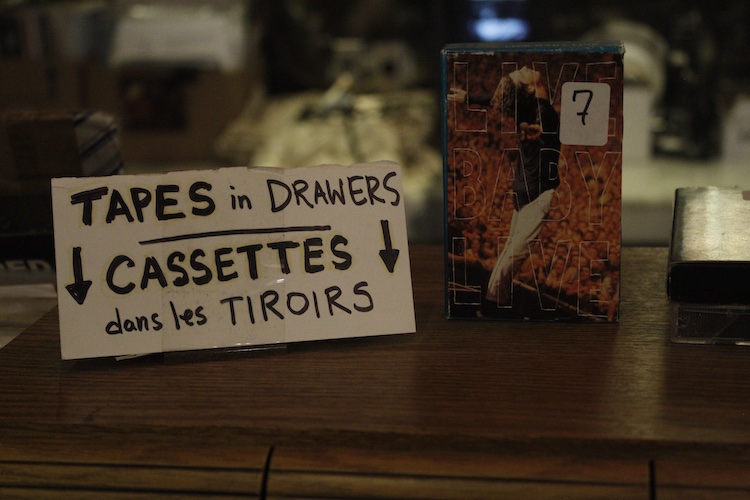
Sign above the cassette drawer at Cheap Thrills music store in downtown Montreal. Photo by Lola Gomez-Ribeiro.
Al-salman is unsure whether he will be selling cassettes in his store. Many artists still release music on cassettes, but they end up as nostalgic collector’s items. He went to Baghdad and dug through old record shops with his son, found old Arabic albums on tape, and bought them for $5 from the shop clerk. He brought them back, and they sold instantly.
“People were like, oh shit, Umm Kulthum on cassette?!,” Al-salman said, “They bought it just because it was cool.”
He thinks that cassettes will have their comeback, but CDs will come first.
According to StatsCan, in 2023, streaming accounted for 79.2 per cent of total sound recording sales in the industry, up 3.3 per cent in 2021. Sales of other formats, cassettes and vinyl records rose, made up just 13 per cent of total sales.
When CDs first started coming out, “It felt like an evolution, not a replacement,” Al-salman continues. “When you pop a tape in, it hisses because a band is running across the reader, so you hear the sound of the band, and dust is released, too.”