BY Claudia Beaudoin
Anastasia Barcar has attended dozens of births as a registered nurse and doula. She knows when to offer encouragement and when to step back, how labour can unfold differently from one body to the next.
When it was her turn to give birth, Barcar planned to deliver at LaSalle Hospital, where she had once worked. She hoped for minimal intervention, letting labour progress as her body allowed. But when the contractions intensified, she found herself searching for something steadier.
“I couldn’t find that serene place because it was hurting,” she says.
Even with her husband by her side, she felt she needed more hands.
“He was great,” she says, “but in a time that I needed more support and I needed more hands, he couldn’t have more hands.”
Eventually, complications shifted her plan, and she chose to have an epidural, a form of anesthesia commonly used to manage pain during labour.
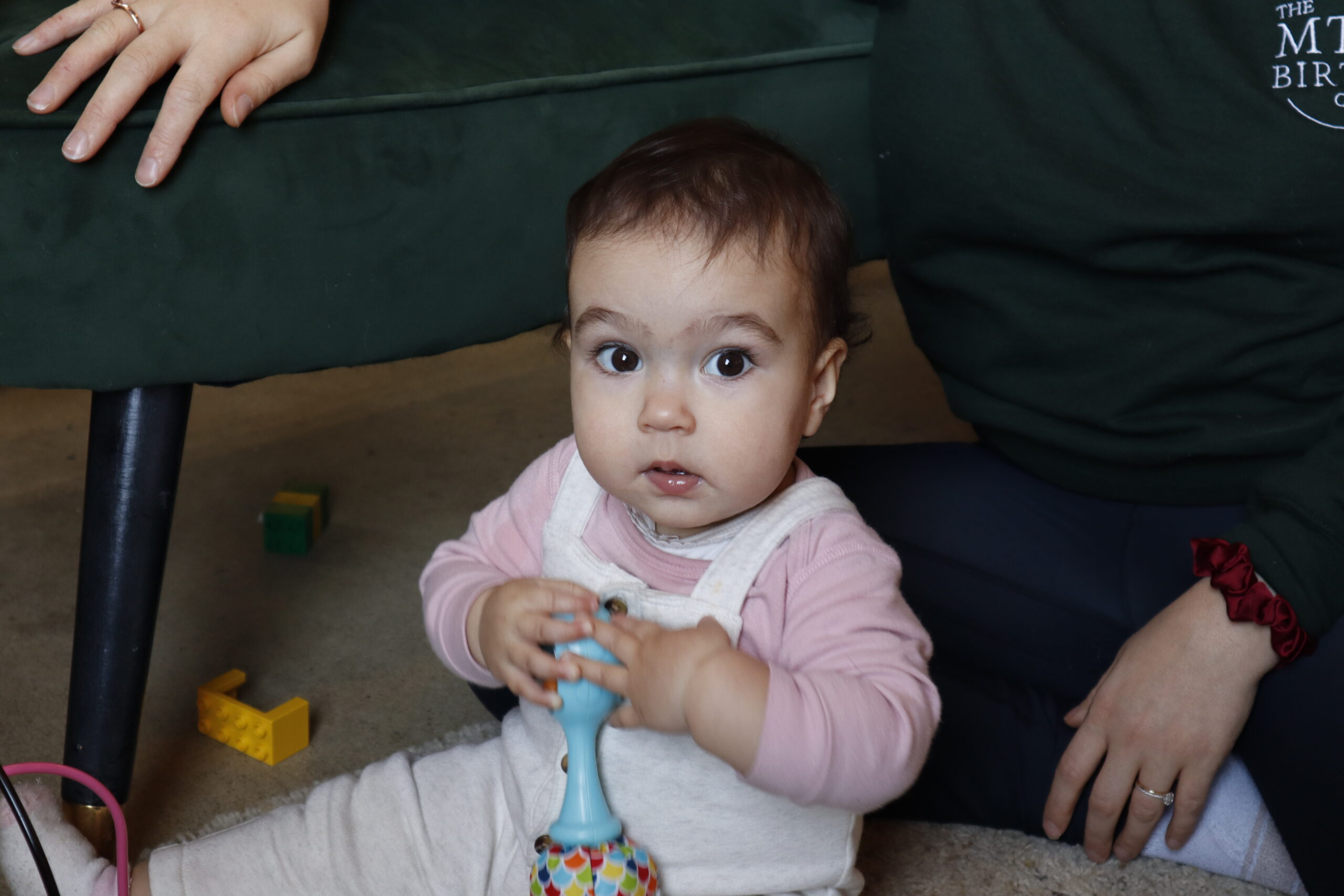
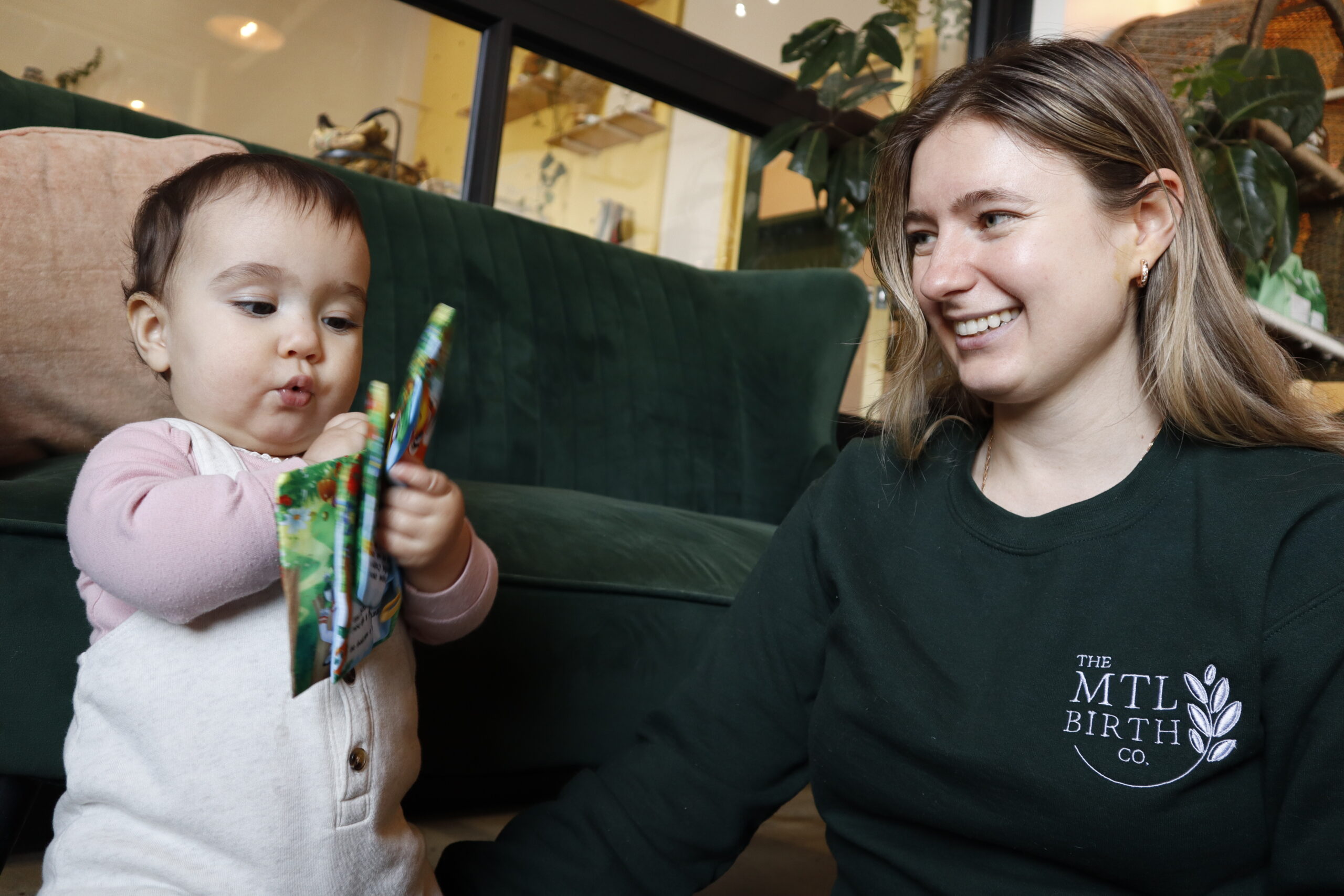
Sofia, one, plays at a Montreal coffeeshop while her mother, Anastasia Barcar, speaks about her birth experience. Photo by Claudia Beaudoin.
The experience gave Barcar a perspective she had seen many times from the other side of the bed. Women arrive with expectations for how they want birth to look. Once labour begins, those expectations can shift as the body or the baby demands something else.
“Natural birth” is often used to describe vaginal delivery without pharmacological pain relief or significant medical intervention. For some, it reflects a desire to stay present or to avoid medication. For others, it is tied to personal or cultural beliefs about birth.
For Barcar, the term can be tricky, shaping how different birth experiences are understood, especially for those whose labour does not follow the plan they imagined.
“The epidural is brought up in a way like, ‘Well, at least you know you did everything you could,’” Barcar explains. “So then, is it a tool or is it a failure?”
Data from the Public Health Agency of Canada shows medical intervention during labour has become more common over time. Epidural use increased from 53.2 per cent of births in 2006–07 to 57.8 per cent in 2015–16, alongside rising rates of induction and caesarean delivery.
At the same time, the maternity care landscape has been shifting in multiple directions.
Over the same period, midwifery care has expanded. In Ontario, the share of births involving midwives rose from 12.8 per cent in 2012–2013 to 19.7 per cent in 2023–2024, within a system that also includes obstetricians, family physicians and gynecologists. In Quebec, however, midwives attend just 4.2 per cent of births—well below the national average of roughly 11.8 per cent.
Midwives in Canada are regulated health professionals who provide care throughout pregnancy, labour and the postpartum period. Their services are publicly funded through provincial health systems.
Sophie Beaudoin-Dion has practised as a midwife since 2012. In Quebec, midwives complete a four-year university bachelor’s degree—offered at just one university in the province—combining academic study with clinical training.
“What is happening in your body during pregnancy and childbirth is central to the work. It’s a medical profession, but it’s also a care profession,” says Beaudoin-Dion.
Midwifery care is often closely tied to birthing centres, though access varies by region. According to the Regroupement Les Sages-Femmes du Québec, prenatal care typically takes place at a birthing centre when one is available, with births occurring at home, at the centre or at an affiliated hospital, depending on parents’ preferences and clinical circumstances.
Map showing the locations of Quebec’s birthing centres and their geographic spread across the province. Map by Claudia Beaudoin.
Since 2018, Beaudoin-Dion has worked at the Maison de naissance Côte-des-Neiges.
“One of our main focuses is not that you give birth without an epidural or without this or that intervention. It’s really the possibility of empowerment through pregnancy, childbirth and the postpartum period, when women can live it on their own terms,” says Beaudoin-Dion.
The Maison de naissance Côte-des-Neiges has four birthing rooms, each with a private bathroom and bathtub. One room features a freestanding tub and is the most frequently requested. Beaudoin-Dion says this is largely because bathing is commonly used during labour and pregnancy.
“We want to really honour and respect that, and to kind of view the process as natural and physiological, and not something medical or scary to control and to measure. Because the becoming of another human being is much larger than just how much your belly grew between appointments,” Beaudoin-Dion says.
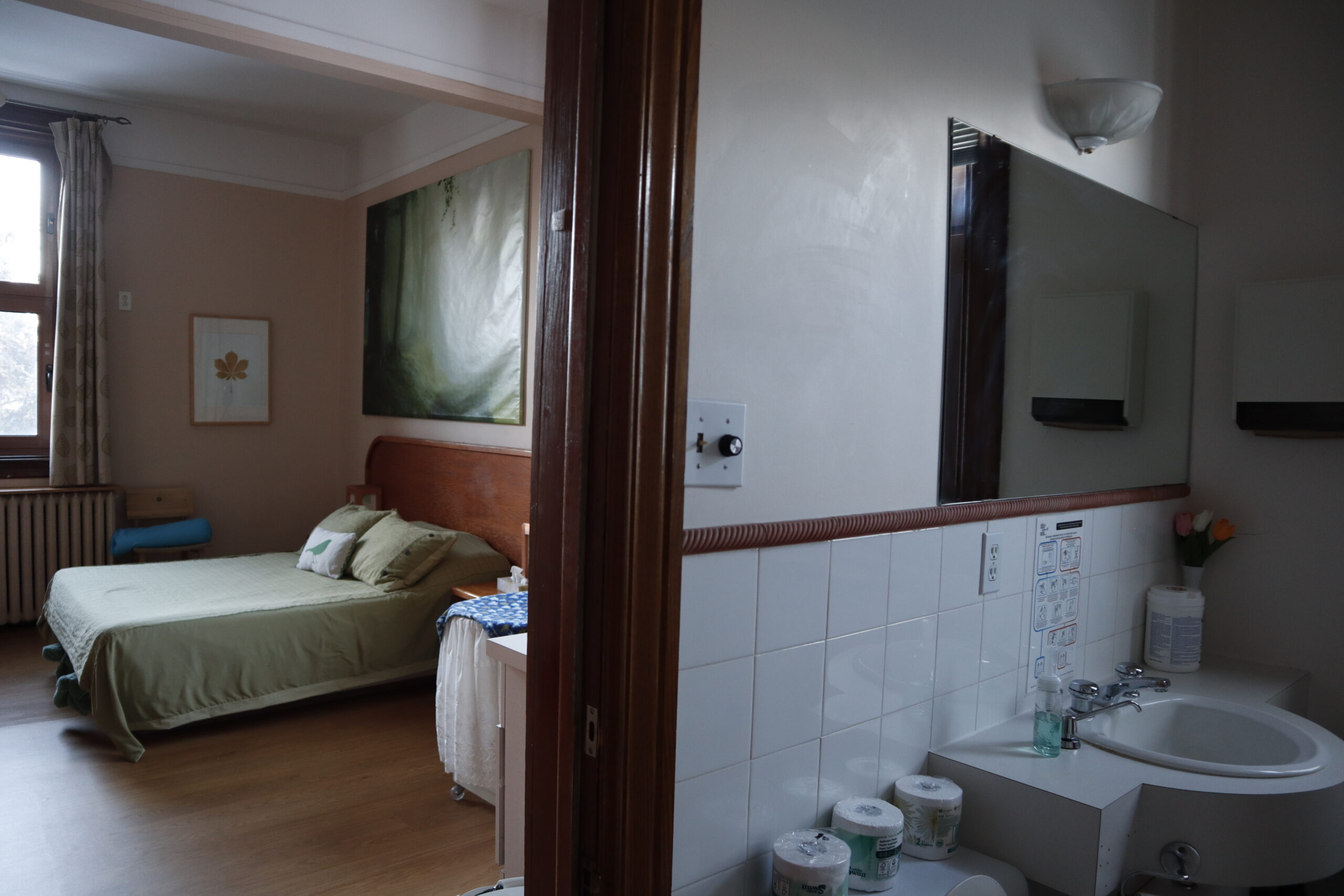
A birthing room at the Maison de naissance Côte-des-Neiges features a double bed, a newborn bassinet, an adjoining private bathroom and nature-inspired décor. Photo by Claudia Beaudoin.
In addition to clinical care, the centre provides meals after labour and has some medical supplies on site. Midwives may also use non-pharmacological techniques during labour, such as nipple stimulation or labour stools.
According to Beaudoin-Dion, a common misconception about birthing centres is that they are unsafe or lack clear transfer protocols. She says transfers to the hospital are an expected part of midwifery care.
Based on her experience at the Maison de naissance Côte-des-Neiges, Beaudoin-Dion says roughly 25 per cent of clients are transferred to the hospital before labour begins, with a similar proportion transferred during labour. Overall, she estimates that about one in four clients requires a transfer at some point, and that the vast majority are non-urgent.
“Most of the time, transfers happen because labour is long or not progressing very well. We’ve tried everything outside of medical or pharmacological solutions, and it becomes too slow or too painful for women to continue as it is,” says Beaudoin-Dion.
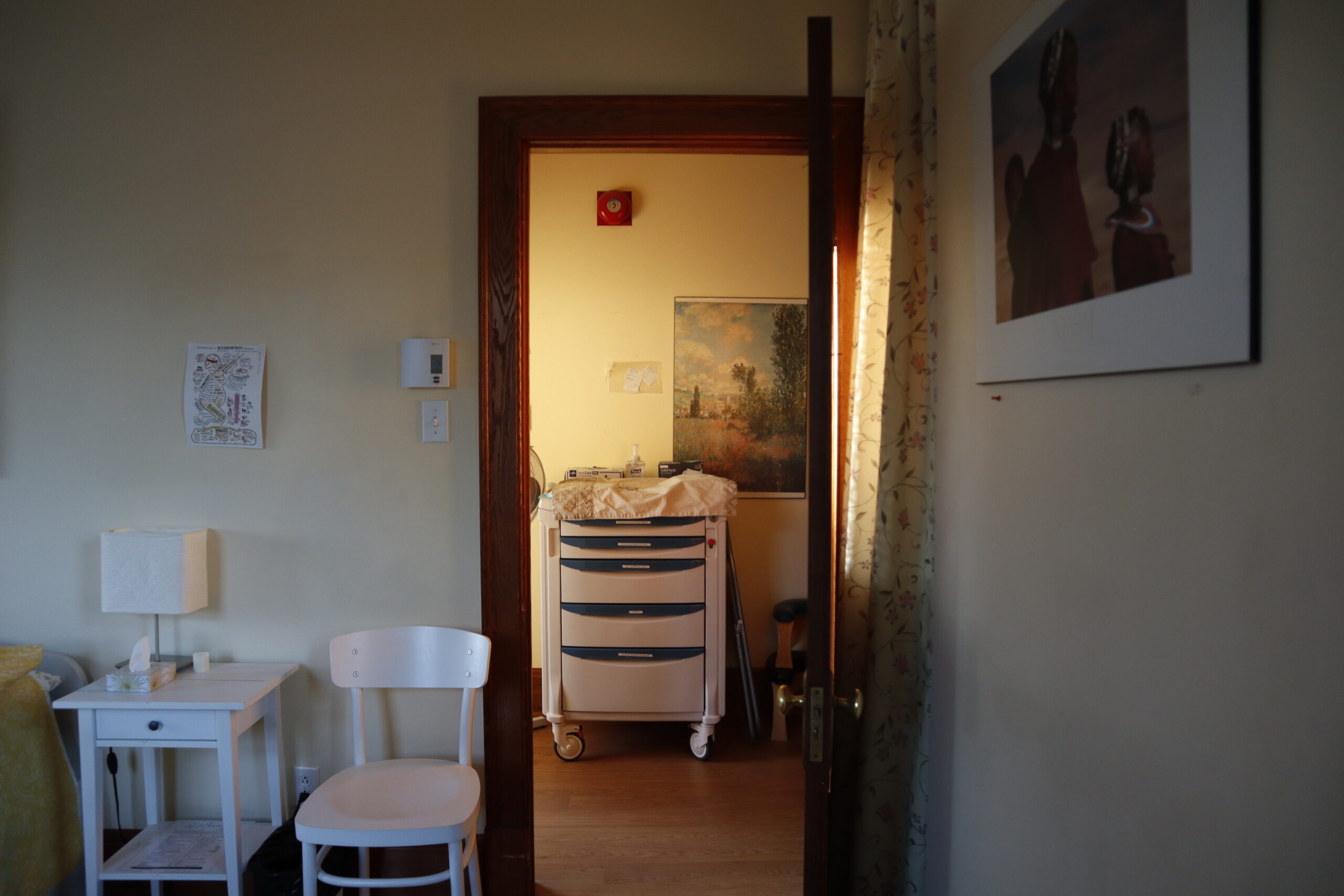
A medical supply cart filled with clinical equipment is positioned in the hallway outside a birthing room at the Maison de naissance Côte-des-Neiges, kept out of the room to maintain a home-like setting. Photo by Claudia Beaudoin.
In hospital settings, nurses often encounter labour and birth from a different vantage point.
Eliana Kabbabe, a clinical nurse at the Lakeshore General Hospital, previously worked as a midwife in Lebanon before moving to Canada in 2010. After immigrating, she completed her nursing degree and began working in hospital settings.
Kabbabe says one of the biggest differences she observes between midwifery and hospital-based care is continuity. While midwives typically follow patients throughout pregnancy, labour and postpartum, nurses are only involved during labour and delivery. At the same time, she says safety concerns influenced her decision to pursue nursing, noting differences in how midwifery is integrated into the health care system in Quebec.
“With the new generation and the new population, we see more high-risk pregnancies than before,” Kabbabe says, noting that pregnancies in people’s 30s are now more common. “So most of the pregnancies are complicated, and they need more care.”
Kabbabe says having physicians on hand and immediate access to medical intervention is essential during labour, and that this is what makes birthing centres riskier in her view.
“The time that you schedule an ambulance to come, the time you’re here, the transfer, every second counts. I’m not going to say every minute, it’s really every second counts. And sometimes it’s a little bit too late,” she says.
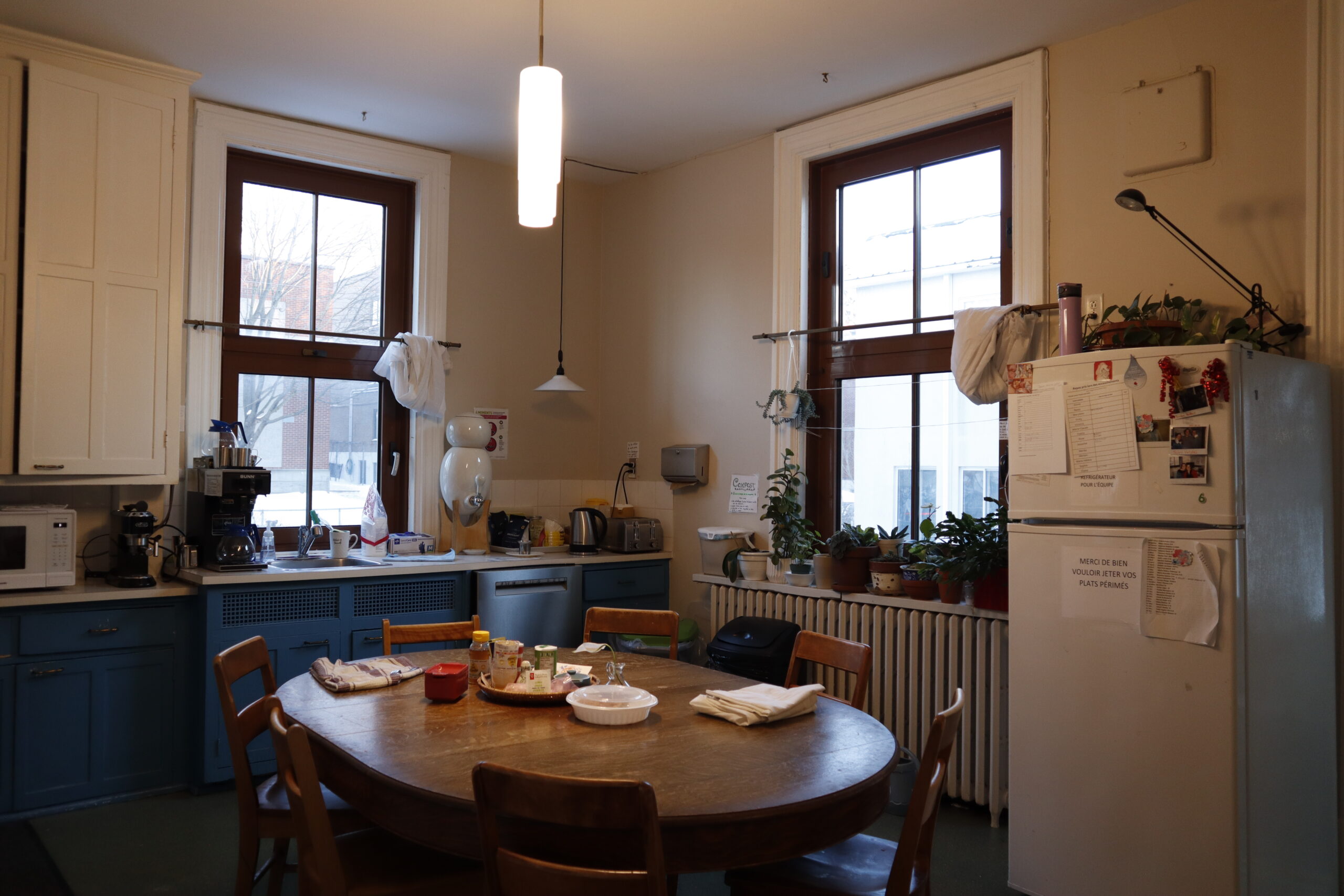
The communal kitchen at the Maison de naissance Côte-des-Neiges, where meals are prepared for new mothers after labour. The space can also be used by partners and visiting family. Photo by Claudia Beaudoin.
Kabbabe says her experience working alongside midwives in hospital settings has at times been similar to her experience working with doulas, noting that roles and boundaries can feel unclear in practice.
“Most of the time, not always, but most of the time, they will interfere with our care,” she says, adding that her experiences have varied. She contrasts this with other cases, noting that some doulas, she says, just support the patients.
Unlike midwives, doulas don’t provide medical care. Their role is emotional and physical support before, during and after labour, whether at home, in birthing centres or in hospitals.
The profession isn’t regulated like nursing or midwifery. Some Quebec doulas affiliate with groups such as the Association québécoise des doulas or certify through organizations like DONA International, but registration isn’t mandatory.
For Barcar and Tanya Hobbs, both former registered nurses, doula work builds on years of clinical experience. Their time in hospital settings, they say, shapes how they understand the limits of institutional care.
Hobbs explains that in hospitals, the priority is ensuring that both parent and baby are safe and healthy.
“That’s always the most important thing,” she says. “But what’s not always at the top of the list is making sure someone leaves their birth not just alive and healthy, but with a positive memory of the experience—feeling like they were treated like a human being, not just a number, that they were listened to, that informed consent was obtained.”
She adds that doulas focus on that experiential side of care.
“We’re not there to make sure they’re alive and healthy, obviously, someone is. We’re there to add that positive birth experience touch,” Hobbs says.
She adds that doulas are often stereotyped as “hippy” or “fringe,” resistant to intervention and committed only to fully unmedicalized births.
“You can find a doula with the flavour that you need,” she says, explaining that the relationship is often shaped by individual approach and compatibility.
That range of approaches also extends to the broader birth ecosystem, where some families incorporate complementary supports such as acupuncture or osteopathy into their plans.
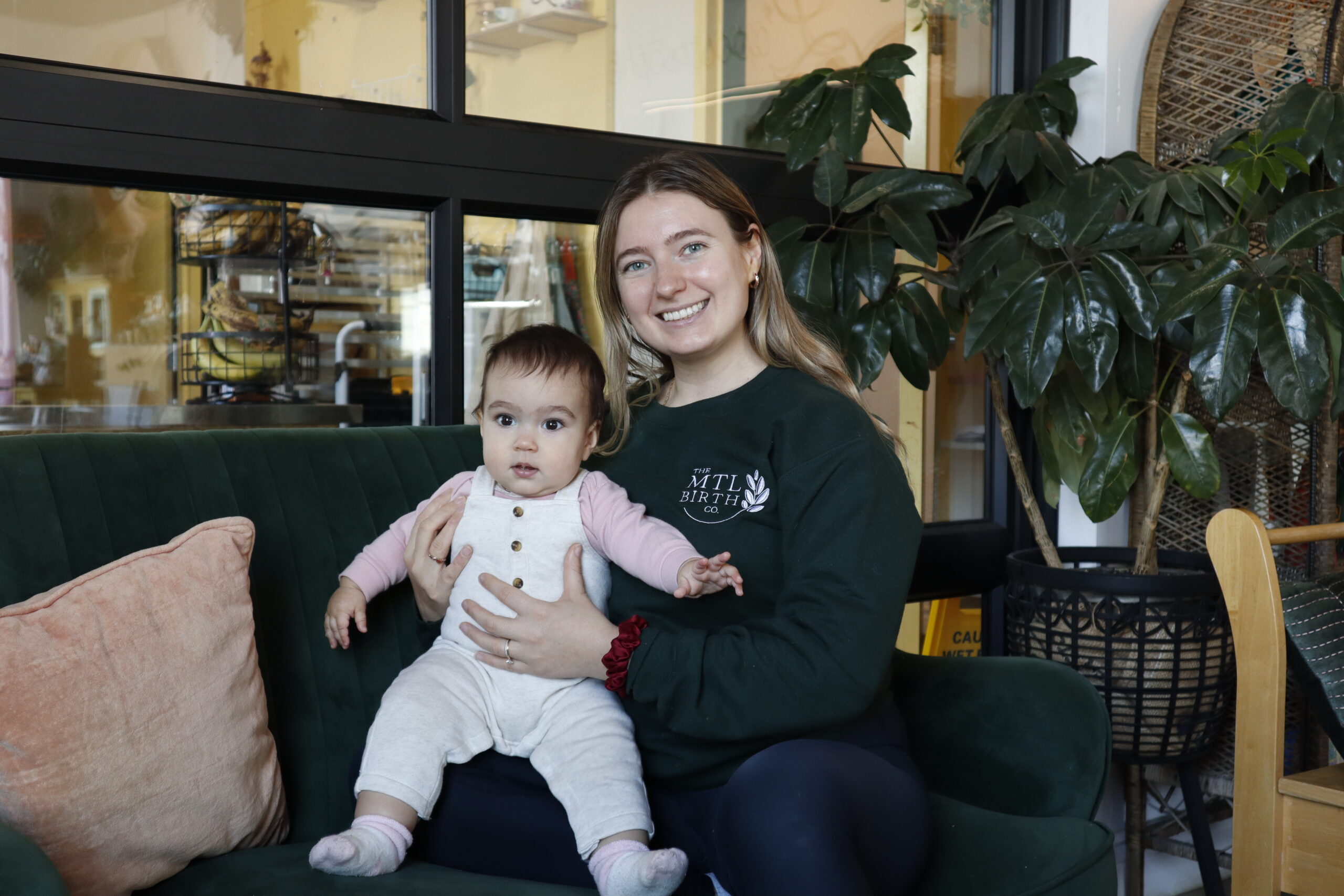
Anastasia Barcar sits with her one-year-old daughter, Sofia, at a coffee shop in Montreal. Photo by Claudia Beaudoin.
Hobbs adds that education is central to her and Barcar’s work. By helping clients understand what is happening during pregnancy and labour, she says they are better equipped to make informed decisions and feel more grounded during the experience. For her, that sense of understanding is closely tied to confidence.
“I think all births are beautiful and powerful, and women need to find that inner strength, no matter how they give birth,” she says.
But Barcar notes that maintaining that sense of strength is not always easy. Regardless of the setting, labour can at times feel fast-moving and overwhelming, and in those moments, people may feel a loss of control.
“When you’re rushed as a birthing woman, those two things don’t go well together,” she says.
She explains that labour is often a long and unpredictable process, and that even for those who choose to deliver in hospital settings or receive an epidural, sustained support can make a significant difference.
“That’s why women say that they had a negative experience because they didn’t feel supported,” Barcar says.
Yet across hospital rooms and birthing centres alike, Barcar says she has observed one thing remain constant.
“Everybody wants a healthy mom and a healthy baby, and they probably want to have a birth that has little intervention,” she says.