
BY Kayla Ifergan & Marieke Glorieux-Stryckman
The hiss of the espresso machine and the rhythmic grind of coffee beans at Alphabet Café in Montreal’s Mile End form a steady backdrop. The rich scent of freshly brewed cappuccinos drifts through the air, mingling with scattered conversations and soft indie music in the cozy café.
At a booth, a group of young women laugh as they lean over their table, phones in hand, trying to capture the perfect Instagram photo of their carefully arranged drinks.
“Eighty per cent of our customers discovered us from social media,” says Tony Argyrofogos, co-owner of Alphabet Café. He believes social media plays a vital role in their visibility.
Starting as a coffee roasting company, Argyrofogos expanded to a coffee shop and even started a matcha brand. The café blends Greek coffee culture with visually striking drinks designed to stand out online, featuring what he describes as “really Instagrammable and authentic drinks.”
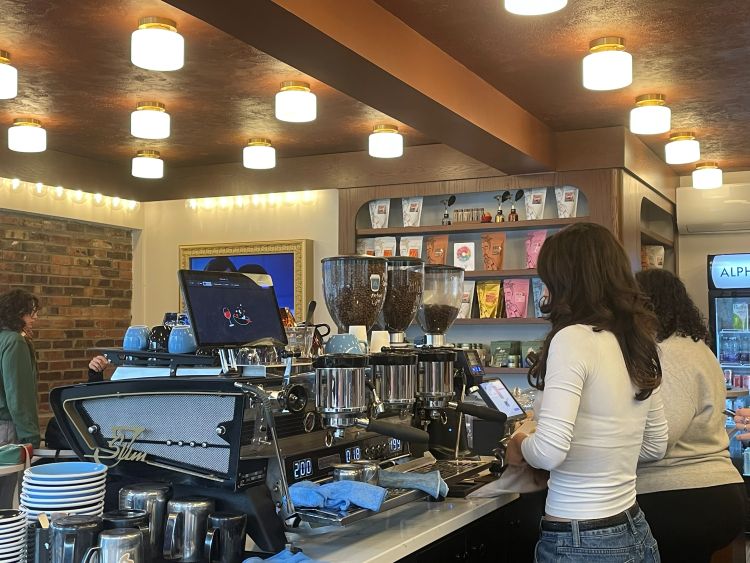
Seen from behind the counter, a barista works the espresso machine at Alphabet Café, the café buzzing with customers on a rainy day. Photo by Kayla Ifergan.
Alphabet Café’s drinks are crafted with performance in mind, allowing customers to film and share as they’re being made. Much of that energy comes from Argyrofogos’ brother and co-owner, Tommy, the café’s barista and on-camera personality.
“If you take your phone out, we’re going to make it something worth posting,” Argyrofogos says. It’s one of the ways the café’s interactive approach is shaped, all while he focuses on shaping the brand’s social media presence behind the scenes.
That strategy seems to be working beyond a single café. Ilan Dexter, a frequent diner who tries new restaurant hotspots at least once a month, says social media has become his main way of deciding where to eat.
“Most of the places I find or hear about are from TikTok or Instagram,” he says. “If the visuals catch my eye, I’ll stop scrolling and check it out.”
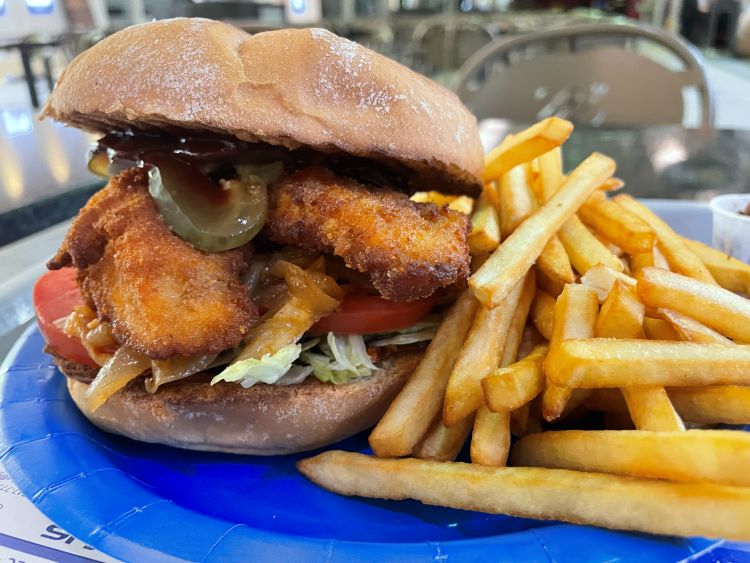
A crispy fried chicken burger with a side of French fries, a go-to item for many customers at the burger joint, Deli Boys, in Côte Saint-Luc. Photo by Kayla Ifergan.
Recent studies show that Dexter is not alone. One survey out of the University of Rhode Island found that 70 per cent of people regularly see food content on social media. And British hospitality firm Zonal found that 48 per cent of consumers use social media to find places to eat or drink.
This trend is especially apparent among younger audiences, who rely on social media platforms like Instagram and TikTok to decide where to eat.
“It’s often the image that catches attention before anything else,” says Caroline Roux, a marketing professor at Concordia University.
She explains that social media taps into deeper psychological triggers, such as the fear of missing out.
“This sense of urgency that if you don’t take the opportunity now, it might never be there again,” she says. “You don’t only miss out on a product—you miss out on being part of the group.”
Recent tourism trends are shifting away from classic sightseeing and towards a more authentic experience of local culture. Food is an important part of that experience. Video by Marieke Glorieux-Stryckman.
That sense of belonging is reinforced by what experts call “parasocial relationships,” where users feel personally connected to influencers they follow online.
“People are willing to trust strangers on the internet more than their friends because they feel like they know them,” Roux says.
For small businesses in particular, that trust can translate into real-life success. Social media allows restaurant businesses to reach audiences far beyond their immediate neighbourhood.
“It’s a lot easier nowadays to start a business and reach more people through social media,” Roux says. Repeat exposure is also vital; seeing the same restaurant or food item multiple times can build memorability, helping a brand stick in users’ minds. However, Roux cautions that overexposure can backfire, creating fatigue and negative perceptions for potential customers.
But the experience isn’t always consistent for consumers. Dexter admits that not every viral recommendation lives up to expectations.
“There was so much hype… and it’s not even that good,” he says, recalling his experience with Crumbl Cookie, whose popularity and virality were severely underwhelming for him. Despite this, Dexter continues to rely on social media even when unsure about the source. “It could have been a paid ad… I didn’t really check. I just take the word of the influencer,” he says.
Engagement metrics, such as likes, comments, and shares, can give a false sense of quality. “If you see a restaurant with a long line, you assume it must be good,” Roux says, explaining what psychologists call social proof.
Despite these challenges, restaurants continue to lean into social media as a marketing tool. Argyrofogos says Alphabet Café focuses on authenticity instead of relying on paid promotion.
“We’ve never given influencers free drinks for promotions […] we’re customer-driven,” he says. Rather, the café builds its brand through storytelling and customer interaction, allowing content to grow organically.
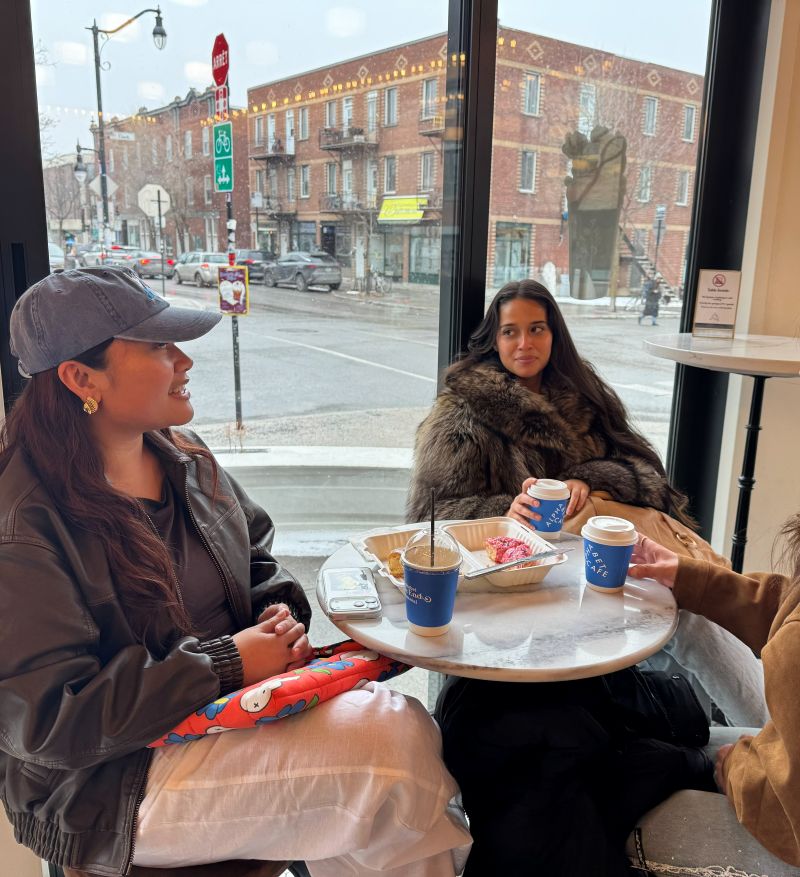
Celia Ah and Georgia Cruz are enjoying the iconic Freddo matcha drinks at Café Alphabet, having discovered the café from Instagram reels. Photo by Kayla Ifergan.
“We weren’t looking for trends. We blazed trends,” said Argyrofogos. From the Greek-inspired Freddo cappuccino to the Instagram-friendly matcha drinks, the café merges authentic culture with visually engaging presentation. Argyrofogos emphasizes that the goal is to create experiences for their customers, not just follow what’s popular.
“We’re always going to be consistent and do things our way,” he says.
Marketing research supports the importance of visuals for small businesses. Roux says repeat exposure and aesthetics are crucial, particularly for younger audiences who are highly active on social media.
“Visuals are important because people scroll really quickly,” Roux said. “A catchy image is one of the things that can grab your attention and suck you in to pay attention to what’s being said.”
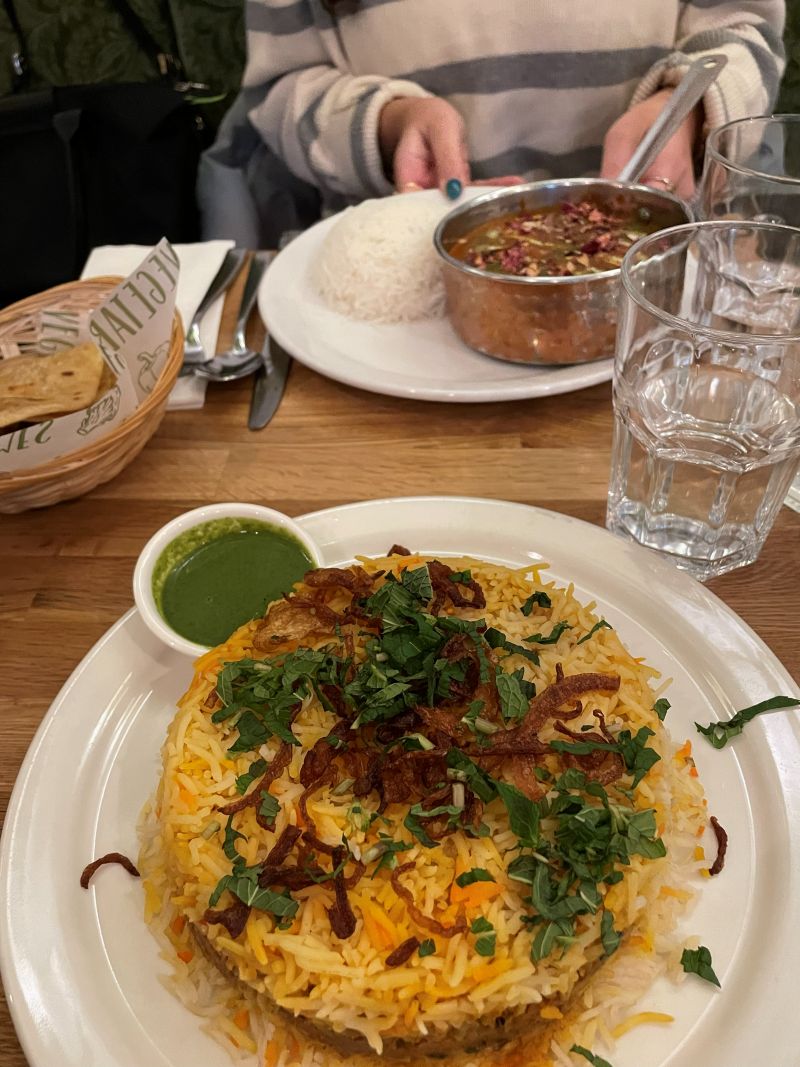
A vibrant vegan biryani and butter chicken at Tula, an up-and-coming Indian restaurant, is attracting customers with aesthetically pleasing dishes in a bohemian-chic atmosphere. Photo by Kayla Ifergan.
With the sheer number of consumers now almost entirely relying on menu photos and Instagram posts to make dining decisions, restaurants that prioritize visually appealing dishes are more likely to convert online interest into actual visits.
For Alphabet Café, the strategy has helped the business expand its customer base from local patrons to international visitors. Argyrofogos says that the café’s popularity as a tourist destination has created unique opportunities to illustrate both authenticity and creativity.
In the broader context, customers like Dexter reflect a changing landscape in which online content influences decision-making and exploration in the food industry.
Finding the balance between visual appeal, authenticity, and customer engagement remains central to success. Roux notes that the most effective marketing depends on genuine, shareable experiences.
“People like what feels real and relatable,” she says.
For Argyrofogos, the focus is on building something lasting.
“We’re always going to be consistent and do things our way,” he says.