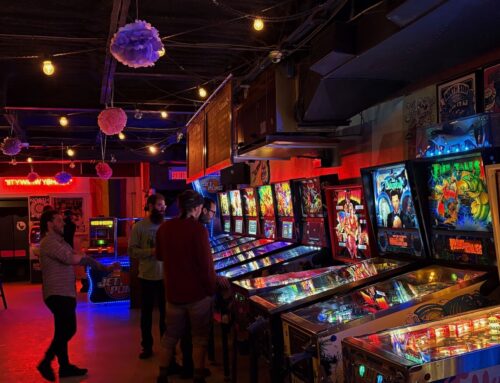

BY Emma Augello & Casey Kiss
Leslie Toledo recalls attending her first special event screening of Interstellar in IMAX. While the large-scale visuals stood out, what made the experience memorable was something else entirely.
“You get to watch the film the way it’s supposed to be watched,” she says. “On a big screen in a room full of people all living this experience for the first time.”
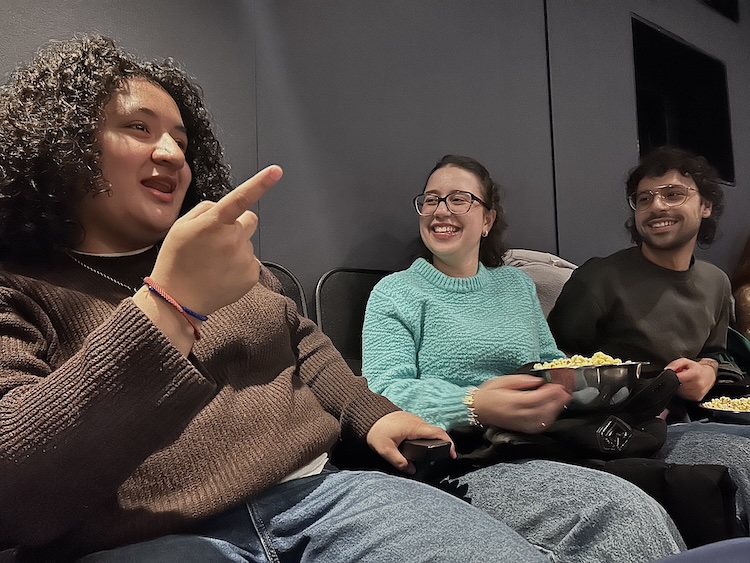
Leslie Toledo (left) attends the 75th anniversary screening of the iconic film Sunset Boulevard at Cinema Moderne with friends. Photo by Emma Augello.
In an effort to entice customers back into theatres, Montreal theatres are increasingly transforming their screenings into carefully planned events and immersive experiences.
According to a 2026 report by Market Research Future, the global movie theatre market is projected to grow from approximately USD 79.34 billion in 2024 to USD 137.41 billion by 2035.
This growth occurs as theatres adapt to competition from streaming platforms and changing audience expectations, trying to draw those who might otherwise watch movies at home.
Will Straw, professor of urban media studies at McGill, argues that the scarcity is no longer the content itself, but the experience of watching it with others.
“That’s the experience that cultural institutions or businesses are more and more trying to offer,” he says.
According to Straw, this shift is not unique to cinema, as many cultural institutions are now incorporating social events into their programming.
“Cinemas want to be part of the social life of cities at night, so adding social events brings them into that,” he says.
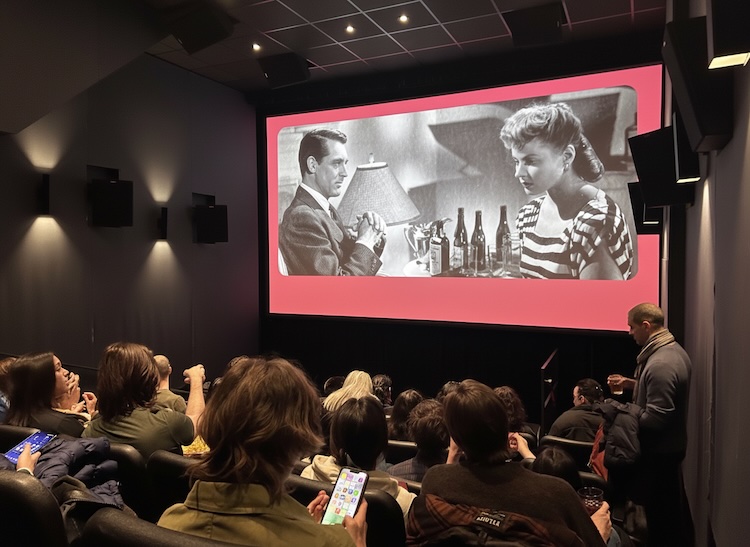
Audience members settle into their seats at Cinema Moderne ahead of a 75th anniversary screening of Sunset Boulevard. Photo by Emma Augello.
At independent cinemas across Montreal, this shift toward event-style programming is deliberate.
Roxanne Sayegh, general director of Cinéma du Parc, Cinéma Beaubien and Cinéma du Musée, says theatres now offer a wide range of special screenings designed to appeal to different audiences.
Sayegh highlights several special events they host, including series such as Parc at Midnight, Queer Cinema Club, and Surrealist Saturdays, as well as free family screenings on weekends throughout the summer, among many others.
These events often go beyond the film itself. Many include Q-and-A sessions, guest appearances, or are tied to cultural moments.
Sayegh explains that these screenings complement regular programming rather than replace it, arguing that they are complementary and allow them to reach a wider audience.
Their impact on attendance is noticeable.
“Our special screenings are often unique, meaning one single screening, so the turnout is naturally higher than for a film screening 30 times a week,” she says.
According to Sayegh, part of the appeal lies in their exclusivity. She notes that the uniqueness and addition of special guests is what draws audiences in.
She sees event-style programming as a lasting part of the industry.
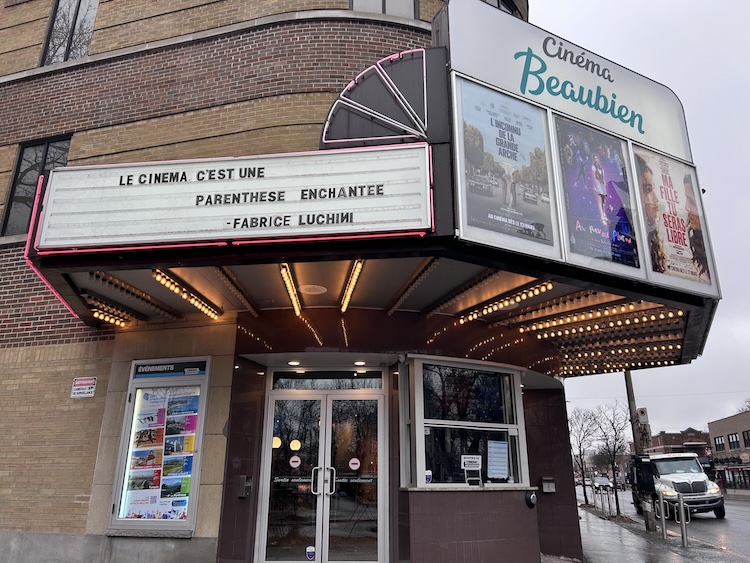
The exterior of Cinéma Beaubien, a neighbourhood theatre known for its curated film programming. Photo by Emma Augello.
Straw suggests that this renewed interest in shared experiences reflects a broader transformation in how people engage with cinema.
In earlier decades, moviegoing was defined by scale and spectacle. Large theatres offered a sense of grandeur, but over time, that experience changed as cinemas became more fragmented.
“The trend now is towards microcinemas,” he says, pointing to smaller venues that offer more intimate settings. These spaces often include additional elements such as cafés or bars, turning a film screening into a broader social outing.
“You can organize a whole evening around going to a microcinema, seeing a film and hanging out,” he says.
Going to the movies today is more like attending a live performance or concert, an experience that extends beyond the film itself.
“In a way, going to see a film now is a bit like going to see music,” Straw says. “You want an alternative, indie kind of vibe and you want to see people like yourself.”
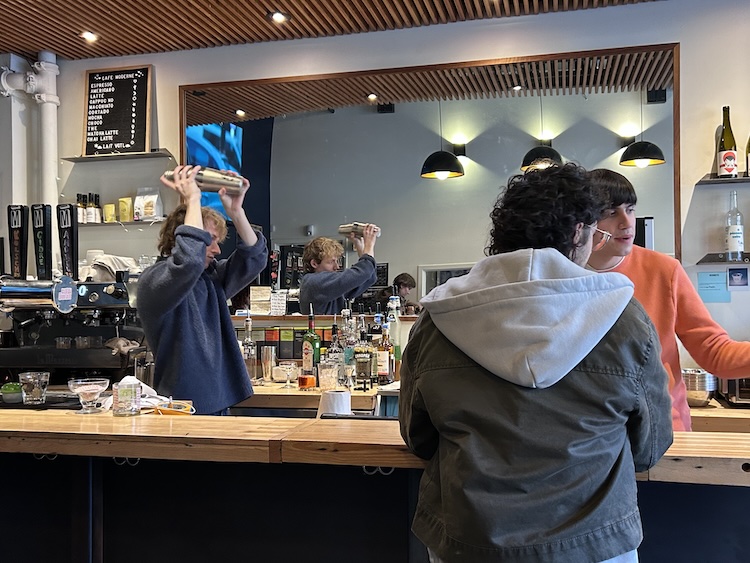
A bartender prepares drinks at Cinéma Moderne, where food and beverage service contributes to the cinema’s event-style experience. Photo by Emma Augello.
At Cinema Politica, a non-profit media arts organization, event-style screenings take on an even broader role.
Ryan Akler-Bishop, programming and network coordinator, says interest in community-based screenings reflects both challenges and opportunities within the industry.
“On one hand, there’s no denying that theatrical exhibition is dwindling,” he says. “Moviegoing is becoming an increasingly niche venture as audiences stay home for more convenient alternatives.”
At the same time, he notes that many viewers are dissatisfied with the streaming model and are actively seeking alternatives, suggesting that this frustrating encourages audiences to go to the cinema as much as possible.
A map showcasing big chain vs small chain cinemas. Map by Emma Augello.
According to Akler-Bishop, this has contributed to growing interest in smaller, community-oriented cinema spaces.
“The multiplex is not a sufficient institution, and so you see an increased interest in microcinemas in response,” he says.
Cinema Politica focuses on curating films that align with its audience’s interests and values. Akler-Bishop explains that the organization aims to put together a diverse selection of films addressing a wide range of political issues.
Akler-Bishop argues that community-based screenings offer something fundamentally different from commercial cinema.
“Community-based screenings are the antidote to commercial cinema,” he says.
Rather than focusing on entertainment alone, these events emphasize interaction and shared understanding. Akler-Bishop argues that it’s a space for learning rather than for profit.
This model reflects a broader shift in how audiences relate to cinema, not just as consumers, but as participants in a collective experience.
With physical media seeing a revival especially in the younger generations, DVD’s have been making a major comeback. Though why is Gen Z taking an interest? Video by Casey Kiss.
While the future of the film industry remains uncertain, Straw believes that event-based programming will continue to play a role.
“Cinema tries to create the same excitement by creating events,” he says, pointing to themed series, anniversary screenings, and curated programming as examples.
Ultimately, he suggests that audiences are looking for something more than just access to films.
“People want to go to a cinema and be sure that lots of other people will be there,” he says. “People with whom they share certain tastes.”
For Toledo, that desire is simple.
“I will always continue to attend these types of events, It’s more than just getting popcorn and a drink and sitting down, it’s an experience,” she says.
As streaming continues to reshape how films are consumed, cinemas in Montreal are adapting by focusing on what cannot be replicated at home: the experience of watching together.