
BY Maya Ruel & Demetra Kritsidimas
Since 2017, Les Assoiffés had become a neighbourhood staple in Saint-Lambert, known for its vast selection of microbrewery beers and comfort food. Emma Lanthier worked there for over three years, learning the ropes of the service industry. She started as a busgirl and worked her way up to server, forming close friendships and even meeting her long-term partner on staff.
“It really felt like a second home,” Lanthier says. I thought I’d be there for a long time.”

Portrait of Emma Lanthier, former server at Les Assoiffés, pouring a beer at the restaurant’s bar during her shift back in November 2025, before the restaurant shut down. Photo by Maya Ruel.
On Dec. 5, 2025, agents from the Ministry of Agriculture, Fisheries and Food of Quebec (MAPAQ) discovered signs of rodent contamination in the building’s basement and ordered the restaurant to close for 14 days.
“It was the holidays – our busiest period of the year because of all the Christmas parties,” says co-owner Nicolas Savard. “We had to cancel them all.”
Within days, deposits were refunded, and roughly $20,000 worth of food was thrown out. Faced with lost revenue and reputational damage, the co-owners chose not to reopen.
“We looked at the numbers and the timing,” Savard says. “After the monetary losses and with the slow winter season ahead, it just wasn’t viable anymore.”
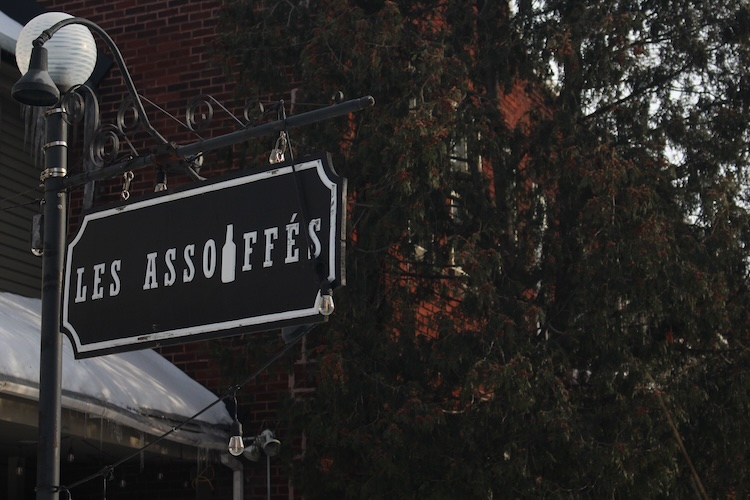
Les Assoiffés’s sign hanging in front of the restaurant. It is scheduled to be taken down soon as potential buyers start to visit. Photos by Maya Ruel.
The announcement was a shock to their clientèle who had grown accustomed to the restaurant’s cozy atmosphere. For staff, the closure meant sudden unemployment just weeks before Christmas.
“As soon as I learned, I started budgeting in my head,” Lanthier says. “I couldn’t help but cry. I was so sad and worried. We weren’t just co-workers. We were a family. Losing the job and the place at the same time was really hard.”
Les Assoiffés isn’t an isolated case. Every year, hundreds of Montreal restaurants are fined for sanitation violations ranging from pest contamination to improper storage conditions. Some even close down, such as Desi-Dera Restaurant which racked up more than $14,600 in fines.
This is a non-exhaustive map of the 20 restaurants that racked up the highest fines in 2025 due to health and hygiene infractions. Map by Maya Ruel.
Fines increase sharply for repeat offences. Businesses cited again within two years can be required to pay double their previous penalty. But according to retired food-inspection agent Michelle Julien, penalties are not meant to be the primary tool.
“Our goal was never to punish first,” Julien says. “It was always to work with owners to get the problem resolved quickly so the public stays safe.”
Julien says inspectors typically give operators deadlines to fix issues before handing out fines.
“If a refrigerator is too warm, or a procedure isn’t being followed properly, owners are usually given a short window to correct it,” she explains. “Fines come when problems aren’t fixed or keep happening again.”
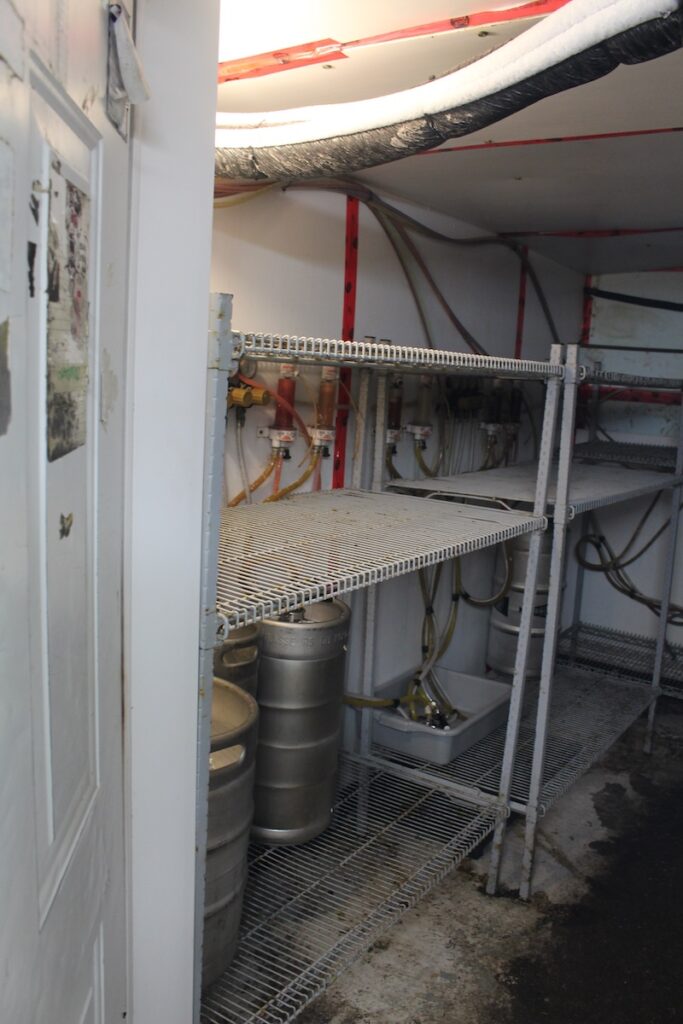
Les Assoiffés’s empty fridge as the food has been thrown out after last December’s shut down became permanent. Photos by Maya Ruel.
Inspection frequency depends on a restaurant’s volume of customers served and past compliance record. Visits may also follow public complaints. Julien explains that closures only happen when contamination risks are considered immediate.
“If there is evidence of pests or sewage backup, operations can be suspended right away,” Julien says. “You cannot take chances with contamination.”
Jenifer Ronholm, a microbiologist specializing in food safety and an associate professor at McGill University, confirms that strict intervention is necessary when contamination is suspected.
“When pests are present, the only safe approach is to stop operations, discard any potentially exposed food, and fully decontaminate,” Ronholm says. “There’s no partial fix for that.”
Rat-related calls to Montreal’s 311 line are on the rise, as exterminators point to construction, aging infrastructure, and limits on pest-control tools. Video Demetra Kritsidimas.
She adds that restaurateurs should also caulk or patch access points that allow the vermin to get in and call an exterminator.
Improper storage temperatures are another common risk factor.
“Temperature control failures are one of the biggest contributors to foodborne illness,” she says. “Even a few degrees can make a difference over time.”
Some foodborne illnesses cause short-term digestive symptoms, including nausea and vomiting, while others can become much more serious depending on the pathogen and the person affected. High-starch foods left too long at room temperature can cause Bacillus cereus poisoning, or “fried rice syndrome,” as heat-resistant spores develop. This can cause anything from mild diarrhea to death if the contamination is serious enough.
“Most cases are preventable with proper handling and storage. That’s why inspections matter,” Ronholm says. “I feel for the workers who lose their jobs. But to be fair, when I go out to eat, I want to know that the food is safe.”
Nevertheless, the economic consequences for small restaurants can be severe. Savard says the closure process was financially and emotionally overwhelming.
“We brought in exterminators, sealed entry points, followed every instruction,” he says. “But the shutdown during peak season was the last blow to our business.”
He adds that pest issues are not unusual in older urban buildings, but prevention still requires constant vigilance.
“Our building was aging, and the insulation wasn’t great,” Savard says. “You have to stay on top of it all the time, which is hard when you’re busy running a business.”

Portrait of Nicolas Savard, former co-owner at Les Assoiffés. Courtesy photo by Thomas Desjardins.
Restaurants operating independently usually do not turn much profit in Quebec, if any at all. The average sits at about 3.5 percent, according to the Quebec Restaurants’ Association. An unforeseen event like a closure is often enough to trigger insolvency.
What customers are able to find out about the causes of these shutdowns, however, remains limited.
Inspection reports themselves are not publicly released, though the MAPAQ keeps an online registry of businesses that have been fined over the past few years. But it often takes a few months, sometimes even years, before a decision is made in court and, therefore, before the decision is published.
Julien says full disclosure of inspection reports has long been debated but raises concerns among agents.
“There has always been worry that publishing every report would create pressure that interferes with inspection work,” she says. “We don’t want [restaurateurs] to say, ‘Well, this could make me go bankrupt if you make this public’ – we want agents to do their jobs properly with no added pressure.”
But she adds that customers should assess the cleanliness and overall appearance of restaurants before eating there, as there often are clear signs that places are unhygienic.
“It’s a matter of common sense,” she says.
Beyond policy and prevention, the fallout remains deeply personal for former staff.
“It’s strange how fast something so central to your life can disappear,” says Lanthier. “I grew up there, in a way.”
Savard shares that sense of abrupt ending.
“It’s a huge part of my life that’s going away just like that,” he says. “This is where I met up with my friends, my family, and the staff and clientèle had become part of my family.”