BY Casey Kiss & Roijar Ghezelbash
Miranda Sample started as a server in restaurants in 2019. She’s seen a steady decline in customers after a brief boost following COVID.
“I don’t make half as much as I used to,” she explains.
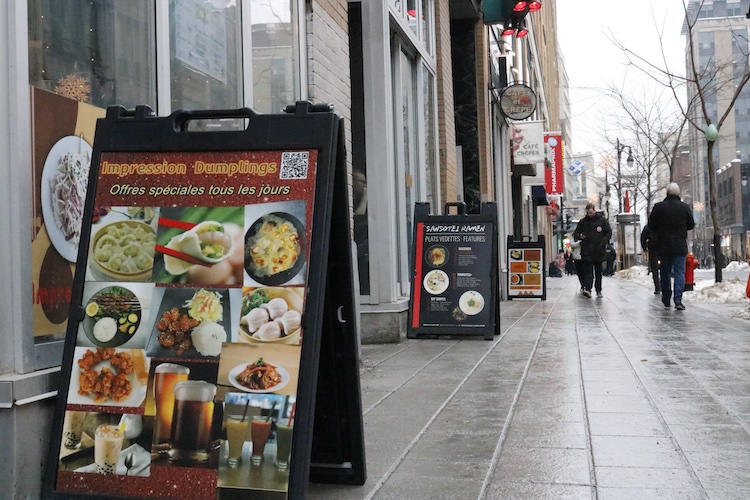
Promotional signs on the sidewalk outside of restaurants on St. Catherine street. Photo by Casey Kiss.
In her opinion, one of the biggest issues turning customers away is poor service.“The service industry have gone down in their pride in what they do […] Now it’s just a bunch of teenagers or 20-year-olds that don’t really give a shit,” she says.
In her view, servers are getting younger, are in school and don’t care to keep their jobs, while for her, “The older people, we stick around, we stick it out, and that’s what makes it so hard.”
This is a complaint shared by consumers. Alyssia Sonoma took to online forums to express her recent disappointments with both service and costs at a restaurant she frequents.
“Nobody cares anymore,” she complains. “Everything is double the price and half the size, and even though you were rude to me, I’m expected to pay your salary?”
This decline in service has led many consumers to turn to alternatives on days when they just don’t want to cook.
Food delivery services like UberEats and DoorDash have become increasingly popular. Restaurants are also facing new competition from at-home catering businesses, many of which were established during the COVID lockdown.
At-home food businesses are transforming Montreal’s food scene. Video by Roijar Ghezelbash.
According to recent analysis from researchers at Dalhousie University’s Agri-Food Analytics Lab, Canada could see the closure of around 4,000 restaurants in 2026, meaning that closures are expected to outpace new openings. This comes after 7,000 restaurant closures in 2025.
Jordan LeBel, a Concordia University marketing professor specializing in the restaurant industry, says it’s a difficult time for restaurants.
“The biggest challenge restaurants are going to face,” he says, “is surviving the next 18 to 24 months.”
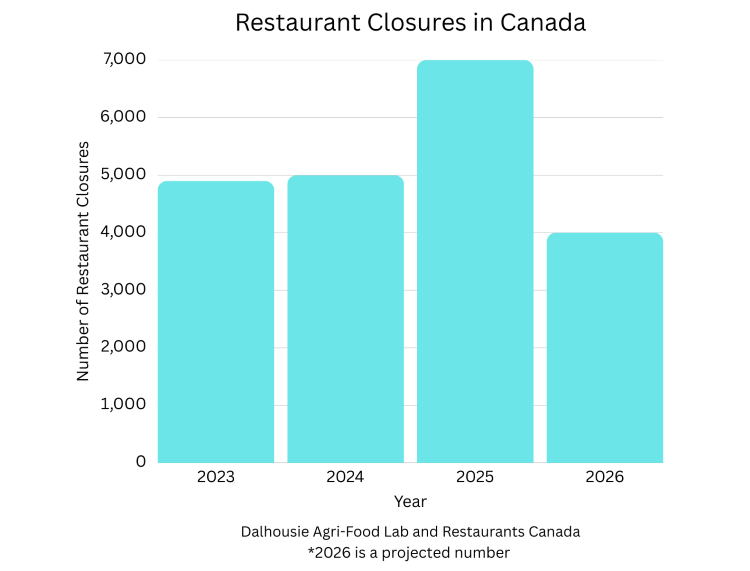
Restaurant closures in Canada by year. Graphic by Casey Kiss.
A national survey reported by The Canadian Press found that 41 per cent of restaurants were operating at a loss or breaking even in mid-2025.
John Parker has worked as a manager at three different restaurants and says the decline is plain to see.
“Every year we brace ourselves for the Holiday rushes, and every year we’re shocked by how dead it is”.
As Sonoma complained about the price of eating out, the price has not only risen for the consumer.
“Restaurants buy in bulk but those prices have gone up too,” explains LeBel.
According to Quebec government data, the price of food purchased at restaurants increased sharply in recent years, with diners paying more than 8 per cent more in 2023 compared with 2022.
This rise in menu prices reflects the overall rise in food costs for restaurants’ supply as well. These supply cost increases stem not only from fluctuating commodity prices, but also from higher prices for packaging, transportation and imported goods.
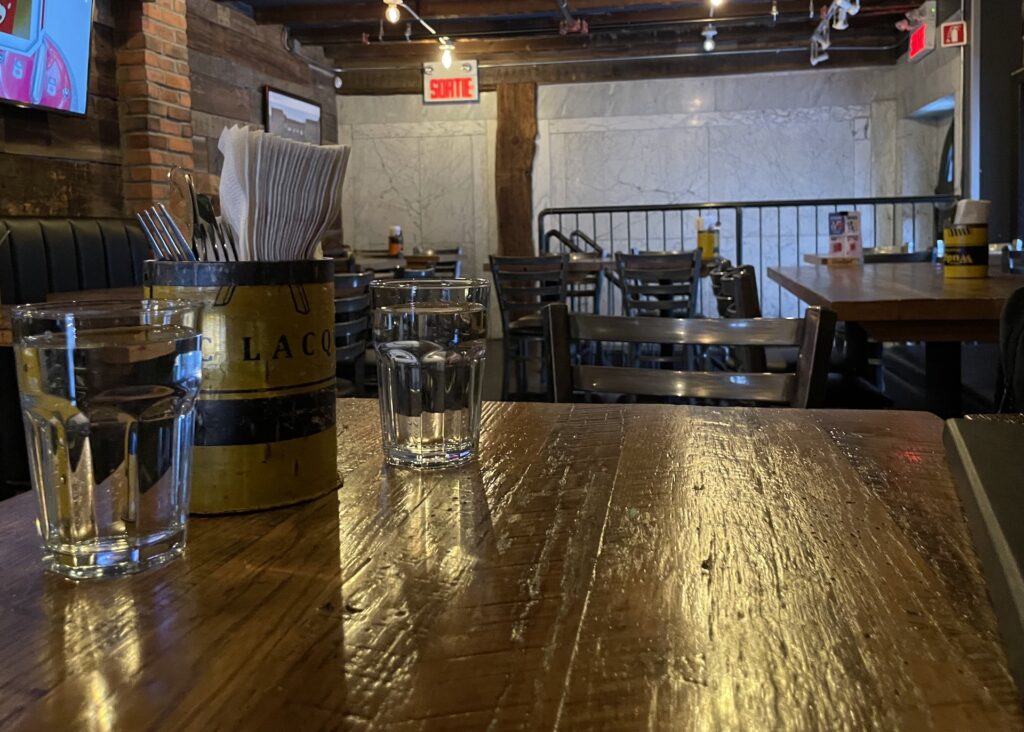
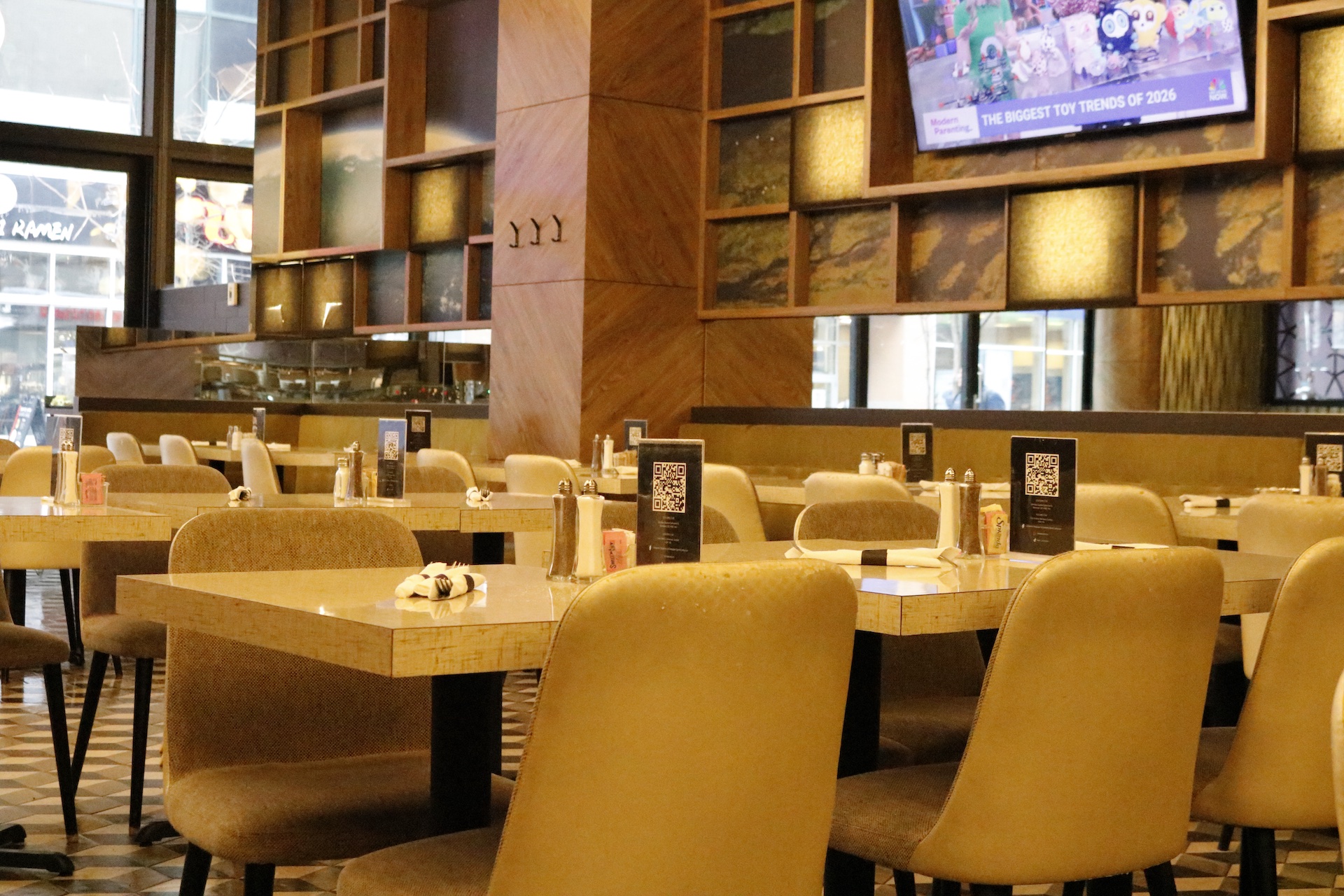
An empty restaurant in the heart of Montreal. Photo by Casey Kiss.
As Parker explains, “We had to get creative with our daily specials to make sure we weren’t wasting any food since it took up a lot of our operating costs.” This, along with the steadily rising cost of living, has turned many consumers away from eating out altogether.
Restaurants Canada’s Consumer Dining Index, a key measure of dining activity, fell sharply throughout 2025, reflecting decreases in the share of people purchasing restaurant dinners at least once a month. This has been hard on servers like Sample, who are experiencing the same increase in the cost of living yet earning significantly less.
“It’s slow, like just to be at work and not have anything to do,” she says.
However, restaurants are actively working to address these issues. Many restaurants have introduced more and more promotions and specials to help bring in business and make the costs less harsh for consumers.
“We really started to have at least one or two promotions per season,” says Parker. “We’d even do promotions around on events we’d be playing on the TVs.”
Many restaurants have begun to streamline their menus, reducing the number of ingredients they need to purchase and the amount of waste. Restaurants are also adjusting suppliers or ingredient sourcing to secure better pricing and ensure more stable stock.
Refining the menu is known as ‘menu engineering.’ It’s a technique that has become very important to the survival of many restaurants.
“So many restaurants show their most popular menu on the item but when you really break it down to the pennies on the cost to make it,” says LeBel. “They’re actually losing money on it.”
Despite these challenges, most restaurants will survive.
“I think it’ll be fine in the end,” says Parker. It’s just gonna suck for a while.”