
BY Marie Latifpour Moozar & Yasmine Chouman
“A ski season is about $35,000 a year,” says Jean-Christophe Bougie, a freestyle mogul skier on the Canadian national team.
But, most of these expenses are covered by him.
“I get around $4,000 of provincial tax credit and no support from the federal government,” he says. “It helps a bit, but it’s still nowhere near enough to cover the real cost of a season.”
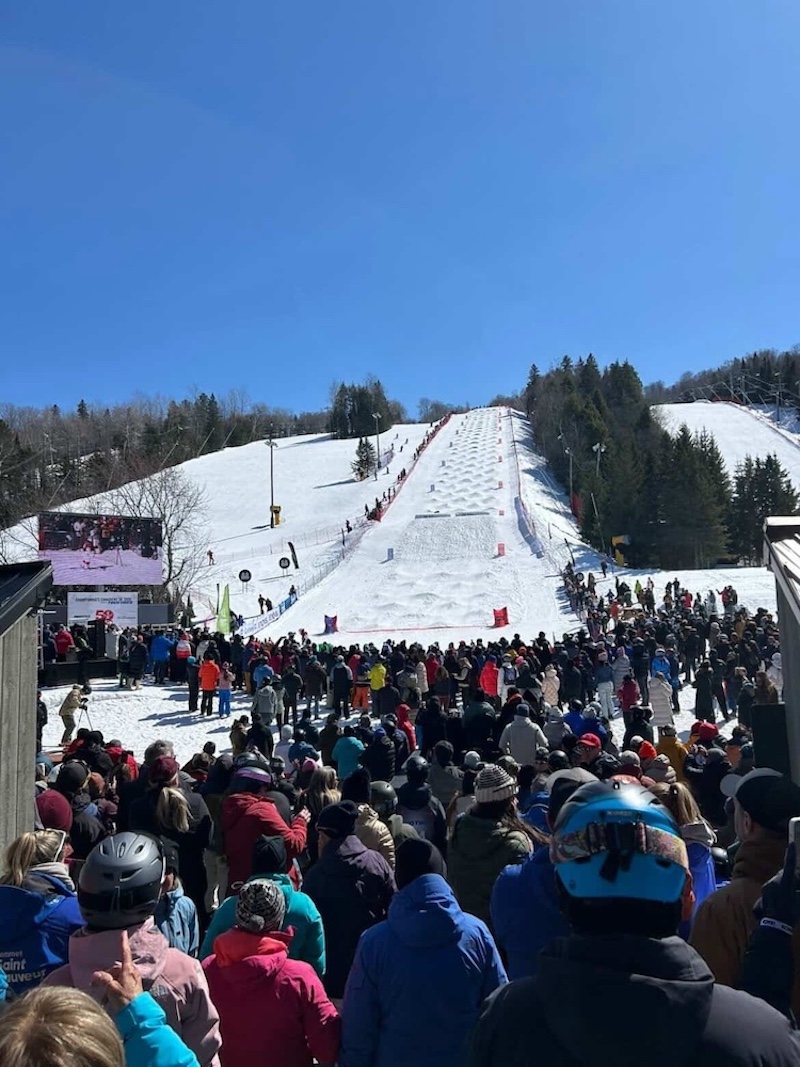
Last competition of the season in mogul skiing at Sommet Saint-Sauveur where Jean-Christophe Bougie finished third in the Canadian Freestyle Ski Championship.. Photo by Marie Latifpour Moozar.
The 2026 Milan-Cortina Winter Olympics were not the best look for Canada.
We only won a total of 21 medals. That’s the worst result since the 2002 Games in Salt Lake City.
And this lack of performance by our Canadian athletes made many wonder what was wrong with our system, especially after seeing both Canadian teams lose to the Americans in the gold-medal hockey games.
“I mean, we also have to pay to be on Team Canada,” says Bougie. “And the fee is higher than what the government gives us.”
It is not only hard for winter athletes. Summer athletes live with a similar struggle.
Florence Hamel, a 19-year-old speed kayaker on the Canadian speed kayak team, says that if the government were to provide financial support, more people could compete at a higher level.
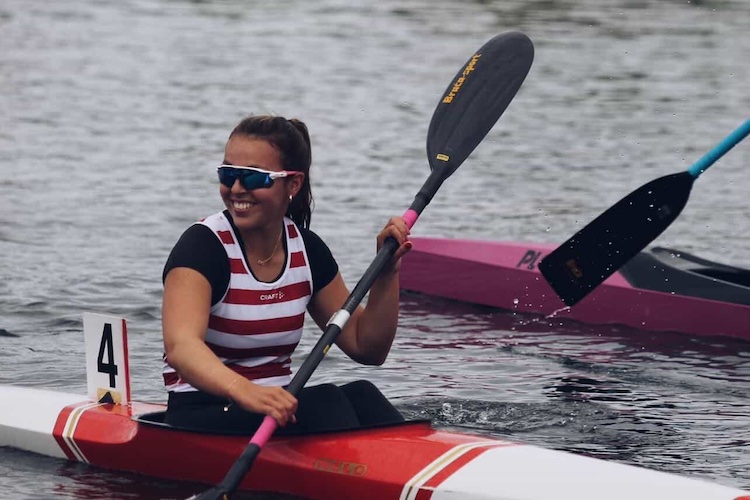
Florence Hamel training before the start of the season in a training camp in Florida. Courtesy of Florence Hamel.
“It’s a sport that requires a lot of time, equipment, and travel, so the financial aspect can quickly become an issue,” she says. “For me, it would make certain things easier, like getting to competitions and training camps.”
To help athletes, Canada created the Athlete Assistance Program (AAP).
“Carded athletes receive a monthly allowance of $1,305 for a development-level card, or $2,175 for a senior-level card,” says Caroline Czajkowski from Canadian Heritage.
The Canadian system does help, but athletes like Bougie say it’s not enough for them to put all of their time into their sport.
“At a certain level, the financial barrier becomes unavoidable. You either can afford it, or you have to walk away,” he says.
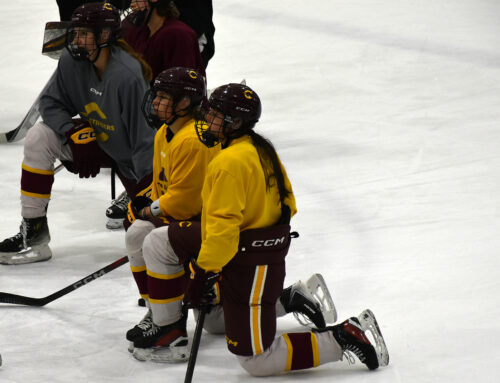
Hockey, for example, is historically known to be Canada’s sport. But as inflation increases, so does the price of this beloved winter activity. Accessibility and inclusion are now at risk on the ice, making it harder for some kids to get into the system.
Youth hockey is facing a shift. Less kids are registering, and more kids are using programs and organizations to finance their hockey. Video by Yasmine Chouman.
David Pavot, a professor at Université de Sherbrooke and Chairholder of the Research Chair in Responsible Sport, explains that for every $100 the federal government puts into sport, only $7 reaches young athletes.
In 2025, the Canadian Olympic Committee and the Canadian Paralympic Committee had asked for a budget increase of $144 million due to the lack of increase in the last two decades, but were turned down. However, the government insists it is putting more money into the system.
“The AAP budget for 2025–2026 amounts to $40 million, an increase of about 43 per cent over the past 20 years to keep up with rising costs,” says Czajkowski.
On their side, the royalty of winter sports, Norway, kept on breaking records. And, their way of viewing professional sports is completely different.
In Norway, 0.8 per cent of public spending is dedicated to sports, compared to 0.3 per cent in Canada, and it is using 64 per cent of its lottery money to fund sports.
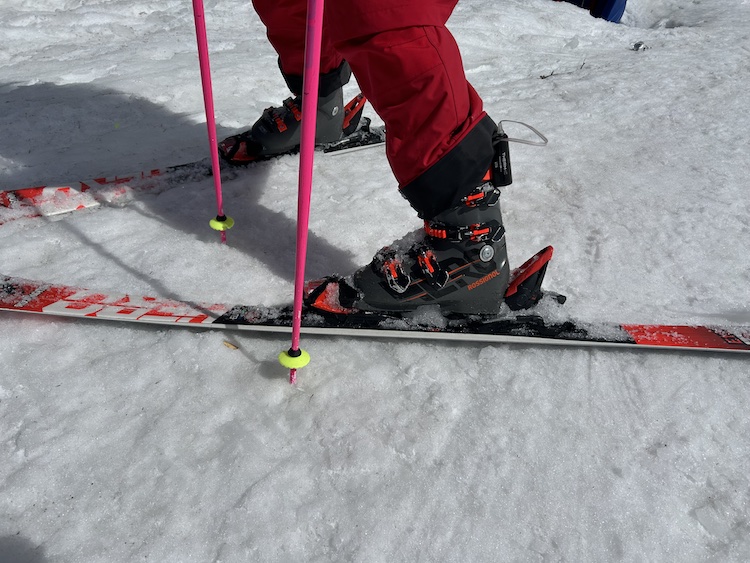
Photo of typical alpine skiing equipment of a ski racing coach in Mont-Tremblant. Photo by Marie Latifpour Moozar.
Bougie explained that the financing has to come from him.
He says: “I’m lucky to have a sponsor who covers my membership fees for the season. But it’s still not enough to fund a full year, so my brother and I had to organize a golf tournament to raise more money. Several businesses got on board, and the event was a success. Without initiatives like that, it would be almost impossible to pay for an entire season.”
For athletes like Bougie, the question is no longer whether Canadians can compete, but if the country is willing to invest in their ability to do so.
“For me,” he says, “better financial support would first take a huge weight off my shoulders, because I could focus on my training instead of constantly having to look for funding.”